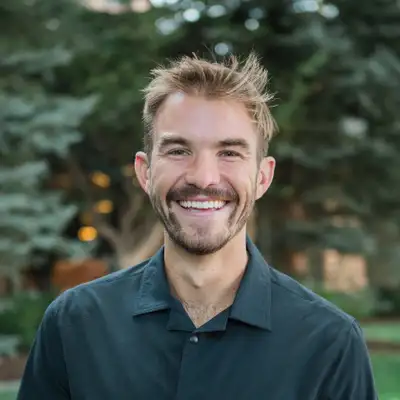
Physical Fitness for Leaders with Andrew Simpson
Just to start, I'd love to ask, Andrew, what is your least favorite misconception around physical fitness?
Andrew Simpson:Oh, there's a lot of those. A lot of those. I mean, the least favorite misconception, probably that you need to have a lot of time. Yeah. Yeah.
Andrew Simpson:That one is just you could debunk that so fast.
Ben Loy:Is that something that you realized early on, or is that something that you've grown to realize as you've gotten older?
Andrew Simpson:Yeah. I mean, my workouts, truthfully, are about thirty minutes. And it's the extent to which you waste time and walk around the gym talking to people that it's actually gonna make it longer. Right?
Ben Loy:Or take three minutes of rest and
Andrew Simpson:Take two longer rest. Yeah. That adds up. You do 10 sets and take two minute rest each time. There's twenty minutes.
Andrew Simpson:Right? So raise the intensity, lower the duration.
Ben Loy:So you own you own gyms. Yep. And then you do athletic training for youth and and, high schoolers. How did that start? Like, when did you realize that you wanted to get into a career and then start a business around fitness?
Ben Loy:When I
Andrew Simpson:was 19 is when I started getting really interested in my own physical health and fitness. So I started changing I started learning about nutrition, changing the way that I was eating, doing some workouts, and I just started to like working out more and more. And then I found out that you could actually have a career in this. When I came across a gentleman who, I still to this day think about him as like Socrates. Like, he was just this wise mentor that was training athletes, and, he I came across him one day training athletes out of a sports complex and found out that you could actually get paid to do that.
Andrew Simpson:I I don't know why. I had never, like, heard about personal training up to that point, especially not for young athletes.
Ben Loy:So you started with personal training then? Yep. Cool. And then what was your, like, experience with fitness before that, before 19? Were you just were you in athletics at all?
Andrew Simpson:Sports. Okay. Cool. Basketball, football.
Ben Loy:Yeah. Yeah. Nice. Why is physical fitness important to leaders? I know, obviously, there's a lot of examples as to, oh, here are the here are some of the principles and things that you can pull from physical fitness.
Ben Loy:But I also think there's a dynamic where it's just, like, it is just beneficial to be physically fit. And so, I guess, to start, like, why why is it important for for leaders to care about their physical health?
Andrew Simpson:Yeah. It's pretty stereotypical thinking about the c suite level executive who ends up having a heart attack because he or she didn't take care of their health. Right? It's like that's that's the obvious one. Like, you you work out so that you don't you're you know, when you're in business all the time, your cortisol levels are always really, really high.
Andrew Simpson:You're stressed, and then it can lead to serious health issues. So one reason you work out as a business person is so that you don't die. That one's pretty obvious. But one thing people don't think about is when you work out, do you know what it's called, the hormones that get released? Endorphins.
Andrew Simpson:Oh. Right? Yeah. Endorphins are
Ben Loy:one of them.
Andrew Simpson:Right? There's there's multiple. It's called dose. Dopamine, oxy oxytocin, serotonin Yep. And epinephrine.
Andrew Simpson:And so when you work out, you get a dose, as one of my mentors tells me, and it's a dose of adrenaline, dose of endorphins. When that happens, your decision making is far, far superior. It's funny. Alex was just today talking about, a decision that he came across in his business, and it happened to be on the back end of doing something physical. Tony Robbins, a mentor that I've looked up to for a long time, shares about a breakthrough that he had over COVID when he was stuck trying to figure out where am I gonna do these events.
Andrew Simpson:I'm supposed to, you know, serve millions of people around the world, and I can't get into stadiums. And he was getting really, really frustrated, and so he went on a run. And he started running faster and faster and faster and faster. And it was after that run, and then he jumped in a cold plunge that all of a sudden, he had this brilliant idea that was to build this studio and have virtual sessions. But long story short, anytime you feel stuck in business and you just can't find the right decision, which business is decisions at the end the day, the better your business, the better the decisions you make.
Andrew Simpson:If you actually work out and then come back to that same decision, you'll you'll typically find a breakthrough. You'll typically find a better answer because your physiology definitely impacts your neurology, the way your brain works.
Ben Loy:Have there been any moments that you can think of specifically, in your own business where you've yeah. Like, the problems just seem so much smaller on the other side of just a good good sweat session.
Andrew Simpson:Yeah. I mean, day to day even, you know, like having employee challenges or frustrations, and then you go work out and you're just happier. Like, those are obvious ones too. Right? It's like that that helps a lot.
Andrew Simpson:I think that our decision to expand our business to go from a 5,000 square foot facility to ultimately a 17,000 square facility, that decision came during a run. Like, that that that was like a moment when we were trying to figure out our lease is coming to an end. We've got a lot of clients. What do we do? And it was like, oh, like, we expand.
Ben Loy:Yeah. Duh. Is that I mean, you would find it a given, but then I feel like I have seen exam enough examples that it isn't. Like, how do you navigate, like, setting a good example and setting a good standard for what that looks like for your team?
Andrew Simpson:For working out? Yeah. It kinda makes it easier, but it also kinda doesn't the fact that our our work is inside of a gym.
Ben Loy:Yeah.
Andrew Simpson:Because the challenge with that is if you're trying to get your own workout in, there might be clients asking you questions, and then you're, like, in work mode, so it's hard. But I think for me, like, genuinely, I wish that I could get the feelings without like, that I get from working out without having to work out. Mhmm. It would just be a lot easier. Like, if I could just without taking drugs.
Andrew Simpson:Right? Like, if I could just, like, push a button and just feel the endorphins and feel the mental clarity and feel the energy that comes from working out, it would save a lot of time, and it would just be a lot easier. And honestly, I would probably do it because the act of working out to me, it's not the most fun thing in the world. Right? It can be painful.
Andrew Simpson:But I do it because I just feel so much better. The energy that I have, again, the patience that I have, not just for my team, but for the family. Mhmm. Like, if you're someone that you get home at the end of your nights and you've made all these decisions throughout the day and you've kept on the good face for the team and you've put a smile on your face even though you weren't feeling it, but you know when you get home at night, you've got a little bit less patience for the people that matter most. That's an indicator that maybe stopping for a quick twenty minute workout before you get home would actually be better than just rolling into the house and Yeah.
Andrew Simpson:Right? And just coming in and having an extra twenty minutes. So for me, like, again, it's been easy to model that because I just don't like the way I feel if I'm not working out.
Ben Loy:Yeah. This can often be a topic that, depending on who you are and, where you come from and your background, like, there can be a lot of shame or even expectations around just the idea of fitness. How would you define, like, what it means to be healthy or physically fit? And and I guess maybe, like, can you push back on some of the the misconceptions or the the things people think about when they think about, like, being being a a healthy individual?
Andrew Simpson:Yeah. And I'm I'm guessing one of the things you're alluding to on this is, like, physical appearance. Sure.
Ben Loy:The way
Andrew Simpson:you look maybe being one of those things. Yeah. Like, that's I mean, genetics have such a big part in that. Right? Like, you're you or me might never look like another person no matter how hard we work out and how clean we eat.
Andrew Simpson:Right? At the end of the day, that that model of perfection in our society of physical somebody looking like they're physically in shape, I mean, that is just a moving target because you can never you know, you you'll never be able to look exactly like another person. And at the end of the day, like, that person might not even feel good because some people that look really great, they they're they're not treating themselves very well as far as their health goes. And so to me, being a healthy person, again, it's mental clarity. It's having the physical energy to not just fake it for people.
Andrew Simpson:Right? Like, I'm just gonna muster it up. I'm just gonna grip my way through having energy for the family, for the kids, or for the team. Like, it's genuinely having overflow.
Ben Loy:Mhmm.
Andrew Simpson:Right? Having enough overflow energy and, again, mental clarity to where you still have capacity at the end of the day. Most people have zero capacity at the end of end of their days, and working out, eating healthy, sleeping well actually increases your capacity. It gives you more.
Ben Loy:Yeah. And and what would you say is the purpose behind that? Being healthy, like, having having that capacity, like, either for you personally or in what you've seen in other people, like, what are what are some deeper reasons why, like, this is important or why, yeah, it just goes beyond, the the appearance side of things.
Andrew Simpson:So about eight weeks ago, I was at my son's seventh birthday party at our gym of all places, And I, we were doing chin up bar exercises and, like, swinging from one bar to the other, and I missed and I fell and I crushed my knee on the ground. Gosh. A knee injury like I've never had before in my life. And because I was obviously prepared, right, I had I had worked out for a long time leading up to that, I eat healthy, my bones are solid enough, I I know how to take care of myself, I bounced back from that in about eight weeks. Now part of it was thanks to God and thanks to some great healing, but at the end of the day, like, had I had not been in shape and something like that would have happened to me, like, no joke, Ben.
Andrew Simpson:Like, I in that moment, I was like, am I not gonna be able to play sports with my kids for the next two years? Man. Like, it it was, like, scary. So I think that just beginning with the end in mind and recognizing that like, I'm 36, so I don't know. You might consider me old.
Andrew Simpson:You might consider me young depending how old you are. Right? But, like, I know that I have a lot of years left where I want to be physically active with my kids. And so I'm beginning with the end of mind. Like, I need to make decisions today.
Andrew Simpson:It's why I stopped trying to dunk a basketball when I wasn't warmed up. Right? Like, I at a certain point, I'm like, if I keep doing this over and over again, my discs in my back will get closer closer together over time, and then I'm gonna be like a 40 year old that has back pain all the time. Right? So I started to see, like, some small signs of that.
Andrew Simpson:And, again, like, I want to be able to beat my kids in a race when I'm, like, 60. So yeah. Yeah. I mean, that's part of the purpose. Right?
Andrew Simpson:Not to beat my kids in a race, but to be physically active enough to be able to do so. Because one thing that somebody said to me one time, they said, Andrew, most people, they they spend the first half of their life giving up their health to make money, and then they spend the next half of their life giving up their money to get their health back. And to me, that sounds so dumb. Yeah. I was like, to me, that sounds pretty dumb too.
Andrew Simpson:I'm not gonna do that.
Ben Loy:I mean, playing the idea of playing catch up, you know, years down the line just sounds sounds like to me.
Andrew Simpson:Yeah. You're gonna have to, like, do steroids or something if you really wanna catch up. Yeah. And that's
Ben Loy:not gonna be beneficial. I guess as time goes on, we keep we keep getting more and more easy buttons. You know?
Andrew Simpson:So That's true. Yep. Don't mistake the easy button for a a button that's gonna last.
Ben Loy:Man, I guess on that note, like, when we're talking about shortcuts, like, what are what do people miss out on when when they take those? Like, what are they losing when they take shortcuts? I mean, most
Andrew Simpson:of the time, they're they are giving up what they want most for what they want now. So long term, most shortcuts are going to come back to haunt you.
Ben Loy:And Yeah.
Andrew Simpson:You know, ibuprofen, for example, it's a shortcut to get rid of pain, but it's actually a long term inflammatory.
Ben Loy:Right?
Andrew Simpson:That that anti inflammatory you're taking, it actually leads to inflammation long term. So you're giving up what you want most for what you want now. And so I think the shortcuts in general, most of them will end up coming back to haunt you. But then you're you are missing out on the developmental process of what it does for your character, and I love that aspect of working out. I mean, it it challenges you.
Andrew Simpson:Right? It challenges your mental toughness. It challenges your perseverance. It challenges your your grit, your focus, your determination. Are there other things in life that can develop those same things?
Andrew Simpson:Sure. But the combination this is why I just think working out is such a no brainer for anybody. Like, the combination of the character development with the social aspect, which you can get from working out if you work out in the right, you know, environment. The the social aspect, the physical health, the mental clarity, like, it just checks so many boxes for a person. Like, you guys talk about a path for growth, high return habits.
Andrew Simpson:Yeah. Like, it is a high return habit. Yeah. One act, thirty to forty five minutes a day, man, the the benefit extensions of working out go so far and wide. We haven't even scratched the surface of some of them.
Ben Loy:And, you know, you listed, like, even character development. Are are there any examples, whether, you know, it's it's clients, people who who go to your gym, but maybe even just friends? Like, have you seen any examples of how this area and, like, really taking ownership of this area has actually transformed someone's life beyond just the physical side of things.
Andrew Simpson:You know what's funny? The first person that came to my mind was my wife, so I'm just gonna give her a shout out right now as we talk about this. So she can now do I don't wanna say the wrong number, she's gonna get so mad at me. I believe I'm gonna say she can do eight full chin ups.
Ben Loy:Let's go. That's Eight
Andrew Simpson:full chin ups, dead hang, all the way down, all the way up, and she couldn't even do one about five, six years ago, I wanna say. And she's had three kids. Yeah. And she can do that many chin ups now. Like and and so each time that she's had one of our children, she's made it her mission.
Andrew Simpson:I'm gonna do more chin ups than I used to do before.
Ben Loy:That's awesome.
Andrew Simpson:And, like, the chin ups are really, really cool, and it's it is one of those exercises. Like, any woman who can do chin ups will tell you, like, it is just empowering. Right? To be able to, like, pull yourself up against gravity. You're going directly against gravity to pull your whole body weight up.
Andrew Simpson:Right? If you're a 130, like, you're literally pulling up a 130 pounds, like, that's really, really cool and empowering. That's cool and all, but, like, just watching how my wife has made it her mission to live a healthy lifestyle for the kids and to work out and to eat clean despite being Italian at her core. Right? It's so much easier to eat unhealthy if you're an Italian.
Ben Loy:Yeah.
Andrew Simpson:But she's just that's a joke. But she has really, she's she's made it a priority. And as a mom that's had had three children, like, I just think it's so admirable that she has, man, she's, like, inspiring me. She's literally doing the high rocks competition next week. I don't know if you've heard of the high rocks, but it's a big fitness competition.
Ben Loy:Headquarters here in Phoenix for the not the headquarters, the the, like, championship here in Phoenix. Oh, was it January, something like that?
Andrew Simpson:Yeah. Yep. Yeah. And I'm just so proud of her for that. And she you know, at the beginning of this year, she's asking me, like, what are your fitness goals this year?
Andrew Simpson:I'm like, I'm the gym guy. How do I not have fitness goals? And she's got them, and so she she's my answer to that question right now. She's she's living it out. That's awesome.
Andrew Simpson:Yeah.
Ben Loy:How like, I mean, you said, yeah, like, I'm the gym guy. You know, I I should have fitness goals. Like, how yeah. Is it has there ever been a season where you've take maybe taken that for granted in a way, or you've realized, like, oh, I've I've even maybe as the guy who owns gyms, like, dialed this back more or or prioritized this less than I wanted to?
Andrew Simpson:Maybe I've prioritized it a little bit less, but honestly, man, like, I I truly do associate mentally so much pain with not working out now. Like, way more pain with not working out than I do with working out. Yeah. Like, I just know I'm so much worse when I don't work out, so I never go more than a couple days without moving or or getting some sort of workout in.
Ben Loy:Mhmm. How has fitness, like, intersected with your faith, and how have you navigated that? How how do those things interact? And then how I guess, how have you seen that play out in maybe some of your team members too? Yeah.
Andrew Simpson:I mean, I think, like, when you are working out, it's a great time to connect with the Lord. Right? It's the body that he's given you and never taking it for granted. I think that if we do believe that we've been given these bodies by God, then what we do with them is our gift back to God. And so I think that, you know, there's bible verses that talk about, you know, this the temple you've been given, take care of it.
Andrew Simpson:And so I think that it is a mandate for us to treat our bodies well, and it's a it's a mandate kinda like the Sabbath. It's a mandate for our benefit, right, not for his benefit, it's a mandate for our benefit. So I think that, that's that's how I think about fitness and faith and taking care of our bodies. But, for our team, yeah, we've had some team members even, that just through I don't know if it's if fitness is the catalyst necessarily. They were attracted to the fitness industry, I guess, at the end of the day, but we've definitely had some team members who have met God through working at our, gym, which is really, really cool.
Andrew Simpson:Because we do prioritize that for our team, right, as far as having devotionals weekly, and that gets into a little bit different conversation. But, yeah, there definitely is a connection between faith and fitness for us.
Ben Loy:Explain that a little bit more. Like, yeah, what does that what does that look like as far as just being, I guess, being a witness with your team and maybe emphasizing that more than other other business owners would or have?
Andrew Simpson:Yeah. In the first, like, year, it started out as in my mind, it was just gonna be, you know, through the way that we act and through the way that we treat our team and the decisions we make, that will be enough of a witness. Right? That was my my thinking. And then God brought a, one of our first coaches.
Andrew Simpson:She was either our second or third coach. Her name is Stephanie. Amazing girl. Brought her into the equation. And I look over one day, and she is hands on one of our clients praying for them in in the middle of a session.
Andrew Simpson:There's people working out. She's got people in her group, and she's praying for a client. I'm like, alright, god. Are are we doing this? Like, is this gonna happen here?
Andrew Simpson:And, of course, the answer was like, yes. Like, we will be a a gym that prays for their clients. Mhmm. And then a client came to us and said, can I sponsor a bible verse on one of your walls? Wow.
Andrew Simpson:Like, I'll pay for it, but can I get my favorite verse on the wall? I'm like, yes. There was just a lot of yeses, I think, and, we just kept saying yes. And so we knew that we wanted to at that point, I knew that it was gonna be more than just kinda covert, you know Mhmm. Making this a ministry, and it was gonna be a little bit more overt, and we were gonna show our faith through different ways.
Andrew Simpson:And again, not overwhelming, not not necessarily, like, beating people over the head with bibles, but we definitely so I think that for our team, though, you know, we've always prayed before meetings, after meetings with, you know, with team members, even if they weren't believers, asking them, hey. Is it okay if I pray with you? Like, intentional about wanting our team to at least know who God is.
Ben Loy:Yeah. I guess to to tie in, the the physical fitness side of this again, it sounds like initially you were you were on the posture of, like, lead by example. And I guess maybe even so with, like, praying at meetings, you're not necessarily requiring that everyone participate, but this is you're just like, hey. This is this is who we are, and this is us operating in alignment of of of who we are. How have you set an example of of physical fitness in your own life?
Ben Loy:And then have you seen that play out in your team members as well? Whether it's with their clients, with their families, has there been any level of, like, cascading effect that you've been able to see?
Andrew Simpson:Yeah. For sure. And we've got a good, like, iron sharpens iron type culture. I mean, we actually have that. It's like a big, weight, and then it's like iron sharpens iron is like a huge thing on all the walls of all of our gyms.
Andrew Simpson:So And I think that we our team kinda lives that out, and we'll check on one another. Hey. Did you get your workouts in this week? We've got big scoreboards in each, of our locations on the, team or the team office wall. And one of, like, the scorecard columns in a couple of our locations is how many workouts did you get last week.
Andrew Simpson:So there's there's that that accountability for sure. And we share stories so often of transformations that happen in the lives of our clients that I think that it's just like by osmosis. Like, our team can't help but to see the benefit and then to share it with others because, you know, working out has transformed so many people's lives in our gym, so naturally, they go out and tell people about it.
Ben Loy:What would you say to, someone who is, you know, they're like, man, this all sounds great. I understand, maybe even at a head level, like, the reason why I should be doing these things, But I don't I don't have the time, you know, I'm I'm overwhelmed by the thought of that, or I just can't stay consistent enough to to really make this a priority.
Andrew Simpson:Yeah. We've, I mean, I've sat across from so many people over the last twelve, thirteen, I guess, fifteen years I've been in this industry. And so I usually go back to a a question. Right? It's like, what is it gonna take?
Andrew Simpson:Right? Like and it's just like, I think that working out again for people brings up so many different emotions depending on who you are and depending on, you know, if you enjoy it or not or there's so many things there that it really has to be a self reflective type thing. Right? You're either going to be reactive because nobody skates by their entire life without having something physical happen to them. Right?
Andrew Simpson:Like, there's gonna be something. Are you gonna be reactive, or are you gonna be proactive? And it's just like, it's up to you. Right? At the end of the day, I would encourage that person, like, all the different things that are hanging up in your mind, right, cost or convenience and schedule, or it's gonna be painful, or people are gonna judge me, like, all those things.
Andrew Simpson:Like, if we had time together, like, we would knock all those down really quick because none of them will be stood up by true by truth. Mhmm. Alright? Like, that's a tabletop that's gonna be wobbly. Any one of those things, it's a wobbly tabletop, and and those those legs won't stand because there there's no truth to those.
Andrew Simpson:There's there's maybe beliefs around those things, but there's no solid truth to them. Right? I've seen people that hated working out. Like, they said they would never step in a gym, and now they are, like, leading workouts at our gyms. Right?
Andrew Simpson:Like, I've just seen it time and time again, and so you just gotta keep getting after it and finding the right place, finding the right setup for you. Make it make it your mission to find what works for you. It's easy to see why it wouldn't work. Right? That's that's always available.
Ben Loy:Yeah. How do you confront those beliefs?
Andrew Simpson:Which one?
Ben Loy:Well, I guess that's
Andrew Simpson:a good question. Is
Ben Loy:there an overall is there an overarching approach, or are you sure, like, dive into each one specifically maybe that you named or one or two of them if you want? Yeah.
Andrew Simpson:Well, I mean, part of it is, like, people come to us because they wanna coach. Right? Like, so they walk in our doors ready to be coached typically. Sure. And then if they if if they're, like, pushing back against everything, you know, we ask them, like, did you come to the right place?
Andrew Simpson:Mhmm. Like Yeah. Yeah. Is a gym.
Ben Loy:Yeah. That's, I guess, fair.
Andrew Simpson:But but in even in today's world, like, are so many different modalities for working out. There's so many ways that you can get fit and healthy that it's like instead of saying, like, I don't like this or I don't wanna do that, it's like, what do you wanna do? Like, what are what's off limits for you? Like, we can start there. Mhmm.
Andrew Simpson:Right? We can we can just stick with these things that you like to do. But then at some point, you do have to ask them what their non negotiables are because if they're like, I don't wanna move. I wanna sit for the full hour. Alright.
Andrew Simpson:Well, you know what? We're not gonna be able to overcome that one. Like, I don't know how to bounce What paying are us for at this point?
Ben Loy:Oh, man. What do you think is the difference between situations or people where you see them, like, really really take ownership of this and and commit and stay consistent? And then the ones that maybe it's the new the new year, maybe something else kind of, like, inspires them to start pursuing this, and then and then it just starts to fall back, you know, farther and farther down the list as a priority as time goes on. Like, are there any elements to their life, their level of commitment, the actions they take that that make a difference in whether or not people stay consistent here or they kind of fall off?
Andrew Simpson:If we're talking about, like, just getting a traditional gym membership and going and working out on your own, I think that you'll lack accountability there. So if you're talking about, like, what we do at PFP, it's like a coach really makes all the difference. Yeah. Right? And having a coach that's gonna make it enjoyable and fun and challenging and and hit the hit the drivers that that drive human beings in general.
Andrew Simpson:Right? If if we have occasional variety, if we have challenge, if we've got connection with other people or our coach. Right? Like, there's there's different things that we know make people stick to something. Mhmm.
Andrew Simpson:There's gotta be an element of certainty, right, in every workout. Like, you gotta have some predictability, but you also need to have some variety. Right? So you gotta kit both. Mhmm.
Andrew Simpson:Yeah. Like I said, connection to others in the gym. That's why we prioritize community so much at PFP and introducing members to one another, having icebreakers before the class starts, getting people to to connect with one another, and it becomes their tribe. Right? So Yeah.
Andrew Simpson:I think that if you haven't ever had a coach and you've never had community and you've only ever gone and just tried to do it by yourself, that's your first thing to change. Right? Pick one of those two elements and watch how it helps you stick with it more.
Ben Loy:Yeah. Man, I mean, I feel like that applies to so many different situations
Andrew Simpson:Yeah.
Ben Loy:Just in general. Like, when you have people that you can you can lock arms with, who you can, in some ways, relate to and learn from, like, it just goes so much so much farther. And then, yeah, and then you plug in the accountability side of it and Yeah. Man. As a business owner, like, is there is there anything that, that you would like to say to someone who owns or runs a business?
Ben Loy:Like, you understand how hectic and chaotic that can be at times. I'm just curious if if you have any any thoughts specifically to to business owners or leaders. Maybe for, like, the the business owners that are either doing it all themselves or they're aggressively scaling their business.
Andrew Simpson:Like, that fear in your mind is, like, if I take an hour a day away from fitness or away from work and put it towards fitness, then it's all gonna fall apart. And I've been there before in terms of, like, you don't even realize how quickly your mind goes, like, seven levels down, and it's so irrational to even think like that. But subconsciously, like, you're believing that if I take time away from business to focus on anything else, then this thing that I built is gonna fall apart somehow. And I know that's a really real, like, subconscious even for many, like, belief, but the truth is, and we talked about this in the beginning, the quality of the decisions you make, like, when you do get yourself active and get those endorphins pumping, Not I mean, yeah, of course, you're a nicer person, a kinder leader, a better leader, like, all those things, but, like, you really do make such more sound and even courageous business decisions when you're coming from a posture of physical strength. Mhmm.
Andrew Simpson:Physical strength or physical, flexibility really does translate to mental strength and mental flexibility. So I would just tell that business owner, like, you took on the challenge of starting a business and running a business. Take on a challenge of one month or for ninety days. Work out four to five days a week. Hire a trainer if you need to.
Andrew Simpson:Whatever it takes, take on that challenge and see if your business doesn't grow and get better, and that would be my challenge for them.
Ben Loy:Yeah. You you mentioned, like, high return habit. What what would you say is, like, a low hanging fruit that would be a high return habit in this area for for someone?
Andrew Simpson:Well, you could span this around, like, sleep. You could span it around nutrition. You could go a lot of different ways with it, stretching. I do think that the endorphins, like, we're talking about are only really gonna get going if you engage in thirty minutes at least of, like, movement, like, working out, you know, either cardiovascular, strength, combination of the two ideally. So the habit, I think, has to be thirty minutes minimum, I would say three to four days a week to start.
Andrew Simpson:Mhmm. Yep.
Ben Loy:Cool. Well, this was great. Thanks, Andrew.
Andrew Simpson:You got it. Well,
Alex Judd:there you have it. Thanks so much for joining us for this episode. If you want any of the information or resources that we mentioned, that's all in the show notes. Hey, before you go, could I ask you for one quick favor? Could you subscribe, rate, and review this podcast episode?
Alex Judd:Your feedback is what helps our team engage in a sequence of never ending improvement. We wanna amplify what's valuable to you and obviously reduce or even remove the things that aren't. Also, you leaving a positive review is what helps us connect with, build trust with, and serve other leaders around the country. So thanks in advance for helping us out on that front. Are you a leader that wants to grow your business in a healthy way, serve people exceptionally well, and glorify God in the process.
Alex Judd:Go to pathforgrowth.com to get more information about our community of impact driven leaders and schedule a call with our team. Hey, thank you so much to the Path for Growth team, Kyle Cummings and the crew at Pod circle, and the remarkable leaders that are actively engaged in the Path for Growth community. Y'all are the people that make this podcast possible. Y'all know this. We're rooting for you.
Alex Judd:We're praying for you. We wanna see you win. Remember, my strength is not for me. Strength is not for you. Our strength is for service.
Alex Judd:Let's go. Let's go. Let's go.