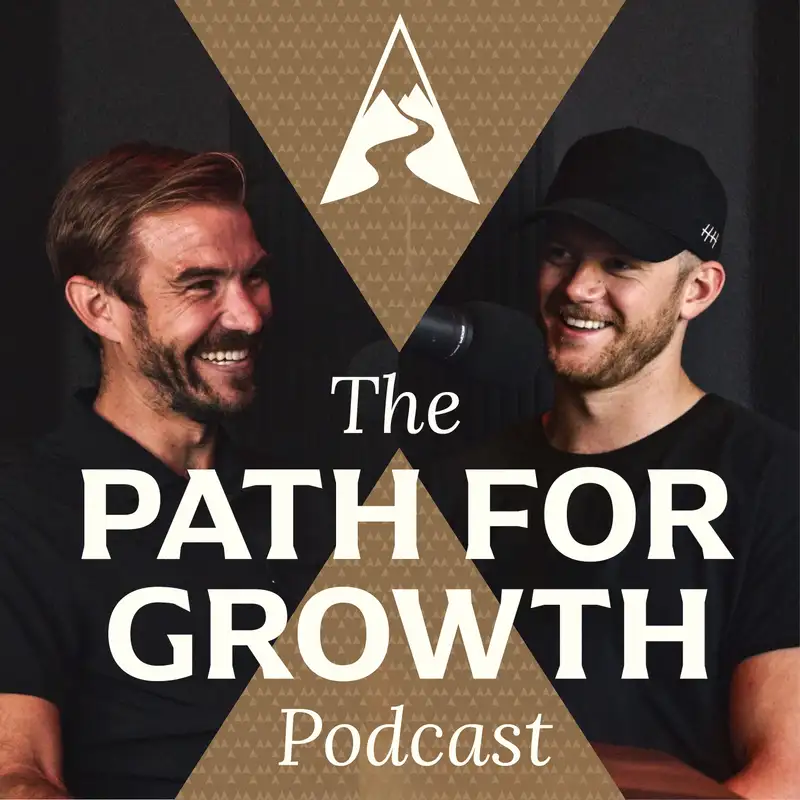
What Great Leaders Can Teach Us About Change with Matt Aiken
Can you avoid change?
Matt Aiken:As much as we want to, absolutely not. Unequivocally, no. You cannot avoid change.
Ben Loy:I guess what are the repercussions to, like, thinking that you can?
Matt Aiken:I think one of the ways that this plays out is if you think you can avoid change, you're going to try. You're going to structure your life in such a way that it doesn't impact you or you can avoid it, you can hide from it. And and then ultimately what's happening is you're not living life as the rest of humans do, going through change. Yeah.
Ben Loy:So you're one of our coaches at Path for Growth. You're also a business owner. You co own your own business. How has change shown up in your own life? We were just talking before this and was like, you're like the most interesting man in the world.
Ben Loy:You just have such a broad range in your resume. Explain like where you've come from, how change has shown up in your life, and just give us a little bit of insight.
Matt Aiken:Yeah. One of the things that always jumps out to me is my upbringing. I moved a ton. My dad's a pilot and when I was younger, we moved from California to Northern Virginia so he could take a job. Texas.
Matt Aiken:And then back back to Virginia. And then I went to school in Knoxville, Tennessee. Mean, never been on UT's campus before, the real UT, UT's campus before. And and so I I actually just built into my identity. I'm someone who has experience and goes through change constantly.
Matt Aiken:And there's been seasons of life where I've sought it out. There's been seasons of life, where where there hasn't been as much as I'm accustomed to. But it's just part of, I think a part of who I am is that I'm someone who's encountered in in a lot of change. Mhmm. And so how's that play out?
Matt Aiken:I mean, maybe that's why I jumped into co owning a board game company with with some friends. That's maybe why I I I've made so many leaps across different functions in the business, you know, from finance to accounting, consulting, compliance, and now, you know, small business coaching. It's it's just so natural to how God has shaped my story that I'm just always, you know, either navigating it or creating it in my own life, which much to the chagrin chagrin of my wife, you know, she she's she's pretty change at verse, you know. One farm, grew up on a fourth generation farm, you know, just lived one place her whole life and then I'm like, all right baby, come on, let's go. Yeah.
Matt Aiken:I also feel
Ben Loy:like with your financial background that plays against the stereotype of what I feel like most people in finances are for, which is like stability, you know, yeah, maybe a little more rigid. And I'm speaking with broad strokes obviously, but yeah, I guess what was that like? Like what led you to be so interested in finances and that whole realm of things coming from a background that's just experienced so much volatility?
Matt Aiken:Yeah. I had not considered a career in accounting or finance as as late as my sophomore year of college. I was actually in my accounting two zero one class and I I was I think I was getting like a 99 and the professor pulled me aside and she was like, hey, I want you to come to my office. Let's talk about what a career in accounting would look like. And I like, wow.
Matt Aiken:Okay. Like, that sounds good. No problem. I'm I'm not gonna stop doing supply chain management, which is what I was studying at the time. And she's like, that's okay.
Matt Aiken:You could do both. I was like, oh, okay. Sure. You know, so to some extent, just that attitude of things are gonna change and, you know, I can go with it. I can go with the flow is what got me into it.
Matt Aiken:Interesting. But pretty quickly into my career, I realized that, the stereotype of accountants, like, do this thing in in in this way. It's actually not that true. Think about what do you talk to your finance person about? Hey, I you know, do we have that in the budget?
Matt Aiken:No. Hey, but I I think we need that in the budget. Can we make a change to the budget? Right?
Ben Loy:Okay. Yeah.
Matt Aiken:So you're you're constantly navigating cash coming in. Did it did it come in where we expected? Okay. No. What do we have to change in our budget to offset that?
Matt Aiken:What do we have to do from a profitability standpoint to to adjust for the results we're seeing? Oh, money's falling off trees. Great. What what do we need to do to adapt to how do we capitalize on, on this momentum to move forward?
Ben Loy:Would you say, is change neutral?
Matt Aiken:No. Not not at all. Change being neutral. I I said this in my talk back in Austin, like, change is not neutral. It's not.
Matt Aiken:It it will have an impact. Right? It'll either force you back from it, like trying to, you structure your life or your schedule in a in a in a way that it's you're preventing it from impacting you, which by the way, then what's happening, everything around you is changing. Mhmm. Or it's going to change you, in which case you're, you know, hopefully not caught up in in in in it sweeping you away.
Matt Aiken:But it's going to have an impact personally, professionally, in your relationships, in your in your brain. Like, it's going to have a change. Mhmm.
Ben Loy:So tell me about a time when change wasn't neutral that it maybe let's start with tell me about a time when change was negative, like it was detrimental.
Matt Aiken:Yeah. Well, I I I can think about, for me, personally, I have four beautiful children, ages right now, 13. I've got a teenage teenage daughter now. That's a that's a big change. That's a good one, though.
Matt Aiken:That's not what we're talking about. But but 13 down to three. And between my second and third, my wife and I had our our first and second miscarriages. Mhmm. We were, I guess, that point, six years into our our marriage.
Matt Aiken:And we've had two children. We've gotten pregnant pretty easily. No problem. And all of the sudden, we encountered this miscarriage, which, man, I'll tell you what, just changed everything. Like, how we communicated, how I related to her.
Matt Aiken:It changed our understanding of of people who'd gone through infertility or were in the midst of an infertility. It had interjected itself into our life in a manner that we couldn't ignore it. Mhmm. And so that first one was, like, I tried to. I was like, oh, okay.
Matt Aiken:Like, okay. Yeah. People have miscarriages. No problem. That's that's no big deal.
Matt Aiken:And then and then we had another one almost at nineteen weeks, pretty far along. And it's like, oh, no. Like, this is a reality that we're gonna have to wrestle through, we're gonna have to adjust to. And and it forced change. Again, not not just in how we related other people, but how I related to my wife.
Matt Aiken:How we had to, to some extent, recover from the trauma of thinking, hey, yeah, we're kind of immune to this thing. And not even really even knowing that it's something that we could deal with to it I mean, not only altering our relationship, but then our trajectory. We were trying to have kids, you know, one, two, three years apart. And all of a sudden now, we're gonna take a break from trying. We're gonna work on healing our bodies, reducing stress, all those things.
Matt Aiken:And so we have a five year gap between my my second and third kid. So it it changed the circumstances of where I'm even living today.
Ben Loy:Yeah. If and this might be really difficult to do, but, like, if you could pick one thing that that experience or those experiences taught you about change, what would it be?
Matt Aiken:Oh, empathy. I I would say about two months in to that second miscarriage, my wife had started going to counseling. And her counselor shared with me a Brene Brown video on what is empathy. And up until that point, my belief about empathy was it something you were you were either naturally gifted with or, you didn't have it all? Right?
Matt Aiken:It was it was just totally nature. There was no nurture. And that video, through this experience, taught me that empathy is a skill to be honed and developed. It's something that you could acquire if you had not practiced it in the past. And so I I embarked on a journey of, okay, I'm gonna I'm gonna try to practice empathy.
Matt Aiken:It changed everything. Not just in how I related to my wife, who at the time, like, she was experiencing these things I didn't understand. Mhmm. Her her, response emotionally to that loss was different than mine. Yeah.
Matt Aiken:I was grieving the future. She was grieving the present. Mhmm. I had mechanisms to cope with that that she didn't. And so when she would say things, I'd be like, I don't understand what you're talking about.
Matt Aiken:But through through that change, I had to learn to say not that looks challenging, but that is challenging. I'm I'm gonna I'm gonna identify with you and say, like, yeah, that's hard. And I wouldn't be on this coaching path that I'm on now if not having learned that skill, which the Lord in all of his wisdom taught me through those miscarriages. Wow.
Ben Loy:Yeah. Thanks for sharing that. Yeah. Let's flip it the other way. Like, what's a time in your life when you experienced change that was like huge?
Ben Loy:Like whether it was just a huge win or it just set you up for success way farther on down the line. Yeah. Do you have any examples?
Matt Aiken:Yeah. You mentioned I am a partner in a board game company called Keymaster and we from 2019, 2018 when I joined to through 2021, we went from a 150 k business up to a 4 and a half million dollar business. And that was largely through our best selling board game parks. And it was wild where all of a sudden, this hobby business, this thing we do on the side of our desks, experienced a lot of success. What what's happening?
Matt Aiken:Things are changing. The the industry now knows who we are. We have a product that people really want.
Ben Loy:Mhmm.
Matt Aiken:And the things that we were doing back then of, like, yeah, we'll print a couple thousand and, you know, yeah, we'll we'll I guess we'll we'll we'll sell it to Barnes and Noble. That that that's a good idea. All of a sudden, the stakes changed and how we had to manage capital. I mean, we had to all of a sudden figure out how do we print 30,000 games at a time where the most we'd ever printed in the past was five. And and and, oh, by the way, this all happened in February 2020.
Matt Aiken:Like, literally, Target at the time had said, hey, we, you know, we do I have time to tell this story? Go for it. Okay. Yeah. Take it back to December 2019 in we're sitting around and and we're realizing Parks is the best selling game in its category at at Barnes and Noble.
Matt Aiken:And Target, you know, they show up the retailer, they show up and say, hey, we want we would love to put parks on our shelf next fall. We're like, oh, absolutely. And they're go, yeah. Okay. Great.
Matt Aiken:Here's what we need you to change though. We need you to make it cheaper and, we need you to make it bigger. We need to make make it bigger. And we were like, well, we can't afford can't afford to make it bigger. It's gonna cost more.
Matt Aiken:We can't afford to make it cheaper because we're already probably beyond what is a healthy profit market. And so we said no. And I I kinda wrote it off, like, there's no chance no chance that we're going to have this game on Target shelves. And, so we put in an order. And then I I don't it was, late February after Chinese New Year, we get we get a letter from Target.
Matt Aiken:Yeah. We'd like, you know, we'd like 15,000 of them. That's like as many as I ordered for not Target and they're gonna want all of it. And that was the same day that our Chinese manufacturer said, hey, we're not coming back from Chinese New Year as quickly as we thought. You know, there's just some sickness.
Matt Aiken:No problem. We'll be back up and running in a couple weeks. Well, yeah, lo and behold, we know what happened. Right? So, you know, the environment of change was we've got this amazing product everyone wants and, oh, by the way, we're about to shut down, you know, the government.
Matt Aiken:We're about to shut down your your mom and pop retailers. We're gonna you know, your your local government's gonna determine you can't shop at these places. But, you know, thankfully, we're sitting on Target shelves now because they said yes and we had enough to cover it. So, you know, there is good change when stuff starts like, when you have a plan and all of a sudden that plan results in the outcome and the fruit that you're looking for, how do you respond to it? Because that is in and of itself change when good things happen.
Ben Loy:Yeah. So you gave this talk in Austin, and you had kind of broken change down into three different categories. What are those categories?
Matt Aiken:Yeah. So I like to say that there's, almost three levels. There's change you're gonna navigate. This is the the day to day, you know, we navigate traffic. We navigate a challenging conversation and navigate, we're navigating a a difficult relationship, circumstances.
Matt Aiken:Right? Navigating. The day to day lefts and rights that keep us on the path to where we're going. Mhmm. We know we're trying to go there, but we just have to avoid obstacles, or or maybe we find the fast lane.
Matt Aiken:Hey, let's hop in the fast lane. I can get there faster. Right? Navigating change. But then there's times where you're you're off course or you realize your target's not what you want any longer.
Matt Aiken:So what do have to do? Well, you have to create change. You're gonna have to alter the trajectory in such a manner that you're gonna get a different outcome. Right? And this can be, a result of results not being where you want them to be.
Matt Aiken:You don't have the cash. You don't have the profitability. That hire that you thought was going to take over marketing turns out, hey, they weren't very good at it. Right? Or or any number of things where all of a sudden you're on a path and you realize not gonna get there.
Matt Aiken:What do you have to do? Well, you have to now create change. You're gonna have to be the change agent. And so that's a, you know, hey, things we do that takes us onto a different course, a different trajectory. And then ultimately, the third type of change is change you endure.
Matt Aiken:This, is change that maybe you had some amount of responsibility in it coming to be, but this is such that you don't necessarily control the speed at which you get through the change or even know where that change is taking you. This is, you know, partnership conflicts. This is personal changes like like deaths, like miscarriages. This is change when, you know, like massive whether it's cultural or economic shifts prevent you from making progress towards the desired outcome. And so you just have to, you know, endure it.
Matt Aiken:Mhmm.
Ben Loy:Yeah. So let's jump into navigating change. How do you navigate change well?
Matt Aiken:Yeah. The context of the talk we did in Austin was about this idea of long game leadership. Right? We're gonna if you're gonna, if you're gonna play the long game, you have to expand your horizon and, service of others, your your time horizon and service of others. And so a lot of what I've been thinking about with navigating change is what are the habits or the practices of leaders that play the long game?
Matt Aiken:And so when I think about navigating change, this is things like, you know, really honing your craft, getting really good at your strengths, you know, as as you as you hone your your strengths, as you as you grow them, what can you do? Well, you can lean on them. Right? You you understand at a higher competency level how to use those in service of your destination. Right?
Matt Aiken:Things like Alex. I would give an example of, you know, if Alex was in a a leadership conference and, you know, there was a there was a hole in the in the schedule. You wouldn't look at Alex and be like, hey, I, you know, I would love for you to speak. And he'd go like, no. I'm I, know, I just haven't been I haven't been holding my craft.
Matt Aiken:I'm not ready for this. Right? No. Like, what happens? You you wanna be ready for that opportunity.
Matt Aiken:You wanna step into it. And so I think about I think about that, honing your strengths. I think about things like not getting swept up. And we live in this social media age. I wonder if this will even get clipped into a a YouTube short.
Matt Aiken:Right? Where opinions and and beliefs as a culture want to sweep us up in in what? The viralness of of a statement or, you know, this this hot take. I don't even think we say hot takes anymore,
Ben Loy:It's do just controversy and yeah. I mean, the whole the whole social media dynamic is just to fuel anxiety. Right?
Matt Aiken:Yeah. So yeah. Yep. So we talk about not getting swept up. You know, as leaders, we've gotta be rooted in something.
Matt Aiken:We've gotta understand, we have to understand our beliefs. We have to have wrestled through what we stand for, whether that's your mission, your core values, or or even just your beliefs around economically, like, how you're gonna win. I'm I'm a board game company. We not only create games, but we also sell them. And so what does that mean?
Matt Aiken:Well, when tariffs come along, I've gotta figure out not only how to, adjust my manufacturing strategy, but also how to adjust my, my sales strategy.
Ben Loy:Mhmm.
Matt Aiken:And if I got swept up in, you know, the the politics of tariffs, that's where yeah. Tariffs come along, like, what are you gonna do? Oh, I I don't know. Should we should we shut down? Should we increase prices?
Matt Aiken:Like, what is everybody else doing? There's there's wisdom in thinking about the market, but don't get swept up in the emotions of it. Don't get swept up, in what could be or what could go wrong. Like, great leaders have already resolved what they believe as they take in information, and they've got, outlets for for working through that information. So that that's another one that comes to mind.
Matt Aiken:I mean, there's a couple others.
Ben Loy:What so what did as far as, so you mentioned the tariffs, like, play that out a little bit more. Yeah. Like, how did how did having a set of core values and, like, yeah, an identity that you could hold to play out in the way that you navigated tariffs?
Matt Aiken:Yeah. Keymaster has four core values, two of which, I mean, I just leaned on immensely when that happened. The first is relentlessly resourceful. We're a scrappy board game company full of scrappy creatives. Right?
Matt Aiken:So, like, when tariffs come along, everybody's dealing with it. And so how can we be relentless in our resourcefulness? Where can we cut the budget in service of, keeping prices where they're at? Or where can we tactically deploy cost increases? Maybe, like, for example, on on products that are already a little bit, unprofitable or or not as profitable as we want.
Matt Aiken:How can we say, like, okay. Well, you know, we needed to adjust for this anyway. So let's adjust here in a manner that gets us the result we're looking for. So relentlessly resourceful. I mean, that's what I I remember getting on the a call with my team after, what do we call it?
Matt Aiken:Liberation day or, whatever it was. Something like that. Something like that. I was like, okay, guys. Like, hey, this is gonna demand resourcefulness for from us.
Matt Aiken:And the second is people first. The two days after that that press conference, I remember one of our biggest competitors had laid off their entire creative staff. I I don't for his business, I think that made sense. They were heavily invested in ads. Like, their product required a very high acquisition cost.
Matt Aiken:And so, like, if you're an acquisition oriented business, when stuff like that comes along, you have to lean towards your strength. Right? Acquisition versus creative. And you know, for us, when I I I remember hearing that being like, man, like, that that makes sense why they're doing that, but it doesn't align with our values, which is people first. And so people first comes in two forms for us.
Matt Aiken:It was like, okay, what can we do to to try to keep our staff employed to try to, make sure that they know what they can do to grow profitability, to protect revenue, to to, be prudent in spending. Right? So we're like, we we wanna make sure you know, not just you're important to us, but here's ways that you can participate in this. Yeah. But then also our customers of like, okay, hey, you know, there's we fund games on Kickstarter.
Matt Aiken:And on Kickstarter, what are you doing? You're giving money for a future promise. Yep. And so what does People First look like? Hey, Kickstarter backers.
Matt Aiken:We're navigating the tariff situation, but know that we're committed to these games getting to The US and us fulfilling it to you, if possible, without charging you more for that. How are we gonna do that? Well, we're gonna do that by great partnerships, by looking again at at ways that maybe we can get a reduced shipping cost. It might take now a week longer, but, hey, if it's in service of not charging customers more, we're open to that versus
Ben Loy:Yeah. Well, with Kickstarter too, they've already waited months. Yeah. Yeah. A week probably isn't gonna make much of a difference.
Matt Aiken:Oh, it's It turns out it's longer than a week. There's a man, you know, when you're when you're staring down the barrel of a 143% increase in in your unit cost, We were like, please hold. Like, factory, please slow down a little bit, like, while we figure out what we're gonna do here. Right?
Ben Loy:Yeah. Making sure, like, maintaining an inventory is yeah. Yeah. I'm I don't have that headache. I wouldn't wish that headache on anyone.
Matt Aiken:Yeah.
Ben Loy:Yeah, I mean, I'll never forget, this is a little bit of a tangent, but I'll, yeah, I'll never forget, my sister bought Parks for me during its first Kickstarter and, it was for a birthday gift. And then I think as Kickstarters go, you know, it showed up months later, but she brought it to me, when we went camping in Montana a few months later and this was during the pandemic. Yeah, 2020. And yeah, it's like, still have the original. So then when I met you and I was like, no way, pulled it
Matt Aiken:off the shelf.
Ben Loy:Yeah, yeah, was like, This is crazy. You got
Matt Aiken:that first edition, we a special sleeve and you were like, Look what I got. I was like, Oh, I haven't seen one of those in five years.
Ben Loy:Yeah, collector's item at this point probably. Anyway, yeah, I mean, it sounds like not only did your core values help you or prevented you from getting swept up, but it also kind of pivots on that first point you made of honing your skills. Like if you had established this scrappiness as, I don't know, what was the term you used for your first core value?
Matt Aiken:Relentlessly resourceful. Relentlessly resourceful. Like if you
Ben Loy:had established that as a core value in your culture ahead of time, like you had the forward thinking and the conviction to establish that ahead of time. Yeah. And then it came into play. And I mean, at that point, if it's a core value, hopefully that means that it's a strength of your team. Yeah, that's really
Matt Aiken:cool. Not aspirational, right? Like that's something we coach and teach a lot. It comes up when I'm working with a new customer and we get to core values and they're like, oh, would love it if we're like this. And I'm like, great.
Matt Aiken:That's an aspiration. That's not a core value. Yep. If you're not that already, then then that's probably not what you value. Because if you valued it, it would be actively playing out.
Matt Aiken:Yeah. You can desire it. You can even, as a CEO, say, like, hey, we are going to aspire to that. But it's not a core value until it's actually active and present and represents your team at its best today.
Ben Loy:Yeah. Was there anything, on the back end of that that you looked at and you were like, oh, we we we didn't navigate this well, or maybe we did fall off of our core values in these areas. Or was it something where you look back and you're like, Man, we handled that the best that we could and we established, you know, we stayed true to our core values and who we are as a company and, like, we're gonna charge on.
Matt Aiken:Mhmm. Yeah. I mean, we we did end up having to let some people go a couple months later. And when I look back, there's there's absolutely some things we were not seeing then. I I'll I'll step back.
Matt Aiken:Someone asked me actually, this was on our team meeting on Friday. Hey, what's something you're grateful for that was unexpected? And I just said tariffs. Not because I'm glad that tariffs exist or I'm glad they don't, you know, like, not for political reasons Yeah. But purely because it did accelerate the identification of some weaknesses in our business.
Ben Loy:Mhmm.
Matt Aiken:And so there was a certain amount of I mean, it's it's always sorrowful. It's always, a little bit of hindsight, you know, biased, when you have to go through layoffs and you go, like, man, I could have done those things differently. But what what I do think we did well was say, like, here's what we're committed to. We're gonna do our best to use our capital to keep this thing going while we figure out where we're going. Right?
Matt Aiken:A little bit of enduring change. Right? Like, yeah, we were navigating the circumstances, but also, like, hey, are tariffs gonna happen? Are we gonna get a trade deal? Okay.
Matt Aiken:Cool. Like, well, how do we keep this as close to the chest as possible in a wise way so that if tariffs went away, if we had a trade deal, I've got my staff, we can hit run. We can like, let let's go back into growth mode. But I mean, I think we look back and I'd say there were some there were some profitability that I I ran the numbers on and I and I kind of assumed, like, okay, if if we sell this much at this level, we'll be doing okay. But I didn't I didn't foresee how poorly consumer confidence Mhmm.
Matt Aiken:Would take a would take a dip. Yeah. And so you again, I couldn't have known that. So Yeah. You know, result Annie Duke talks about decision making.
Matt Aiken:She's got a book called Thinking in Bets. I've referenced this on the pod before. Here we go. It comes back and last time I said, I don't know if I'd recommend this book. I've now talked about it twice.
Matt Aiken:Maybe I should recommend the book. But in it, she talks about this idea of resulting. The idea of we evaluate a decision based on its result versus based on the decision itself. And I think at the time, our decision to keep people on was good and right. It was good and right.
Matt Aiken:Yeah. I didn't love the result we got, but
Ben Loy:Yeah. For sure. What are the other points you have as far as navigating change?
Matt Aiken:Mhmm. The talk was on three figures of I mean, one being Winston Churchill, a figure of history, one being Elon Musk who's alive and to some extent is creating history, and then another, a pastor, Tim Keller, I deeply respect. In all of these men, you see that they were students of history. And so I think if you're gonna navigate change, instead of trying to figure it out all by yourself and have to filter it all through your experiences, go learn from people who have been through change before. In the last in the last three years, I have I have just devoured biographies.
Matt Aiken:It's been such a great joy. And, man, I'll tell you what, they challenged me personally in the kind of vision for my own life and for my business, challenged me as a as a leader and, like, oh, here is the standard. How how did they oh, they they got there through practice, through, you know, working on their craft. Right? Again Yeah.
Matt Aiken:And by by seeing, oh, this person did this. Okay. Well, I can try that too. Yeah. So so be be a student of history.
Matt Aiken:That's a big one. My my one of my success statements from my talk in Austin was people would leave wanting to read a biography. Nice. And I can tell you I'm green.
Ben Loy:Let's go.
Matt Aiken:It feels good to be green, as we say. Good to be green. See with your own eyes? That's another navigating change, principle. I think you see this a lot with Elon.
Matt Aiken:You see this, with with people like Steve Jobs. Man, they are eyes on the scene. They trust their leaders. They trust that the information that they're getting from their leaders is good and true, but also they trust and verify. Yeah.
Matt Aiken:So they're at the site, like, looking at customers or they're on the manufacturing line and questioning requirements. Yeah.
Ben Loy:What what's the line there between, like, micromanaging and still being aware of what's actually going on on the ground?
Matt Aiken:Yeah. I think as a coach, this is something I'm I'm keenly aware of because I I part of what I do with my customers is we spend ninety minutes on the phone and they fill out a prep form in advance, which has just got some diagnostic questions to kind of pull out what what might we talk about Yeah. On our call. And lot of times you've got to understand that perception is reality. Right?
Matt Aiken:Or that there's a what we call a a felt need versus a real need. And so I have to I have to you know, when I show up to a call, hey, you put this in your prep form. That, you know, that sounds really challenging. Can you tell me a little bit more about it? I'm not it's not that I'm not taking what they say at face value.
Matt Aiken:I'm trying to pull back the layers so that I don't not I don't just see through their eyes. That's not helpful. If if you hire a coach just to see like you see things Yep. You're not getting new perspective. One of our three, pillars of coaching, like, we're providing accountability, we're providing perspective, and we're providing direction.
Matt Aiken:And so, like, I have to deploy curiosity to say, what are you seeing? Mhmm. And what else might be seen from a different perspective? And so when you're seeing through other people's eyes, whether that's your staff, you know, your your spouse after a long day of work, you have to be really curious. You have to be relational.
Matt Aiken:You gotta you gotta make sure that, hey, like, I see you. I believe you. I trust you. Is it possible that we could look at it through a different perspective? Elon is notorious for this.
Matt Aiken:A lot of people will, I don't know, I guess criticize him because he'll just he'll show up at someone's workstation and just question everything about it. Probably a pretty uncomfortable Yeah. Experience. But at the end, when he's right and, you know, you've built into your process something that was unneeded and he's just showed up to question it, is that micromanaging or is that just him helping you get better at what you're doing or helping the product get to where it needs to be? You're gonna step on toes.
Matt Aiken:Like, seeing for your own eyes, it's you're gonna step on people's toes. When Winston Churchill decides, hey, French you know, French population, they're on the brink of surrendering and capitulating to the, to the Germans. He saw it and he goes, like, man, we've gotta we've gotta we gotta deal with this now before it becomes a problem. Yep. Seeing with your own eyes before it's a problem.
Matt Aiken:Right? Every, big problem was a bunch of small problem a leader failed to address. Yeah. Sometimes that just requires seeing. As far as micromanaging, yeah, sometimes you're gonna step out of line.
Matt Aiken:So what do we need to do? We need to be leaders who practice health, who practice we have a sounding board, maybe a leadership team around us to say, hey, that was too far or you need to come on up one level out of that. But there are seasons where, yeah, you gotta get on the front lines. I I don't I don't know if that's a guide to how to not macro micromanage, but No.
Ben Loy:I think it was helpful. Yeah. I think just making that distinguishment between yeah. Yeah. There's a difference between, like, trusting your people and trusting the systems you put in place and then also, like, not micromanaging constantly, like being able to, in many ways, like, and we'll talk about this later, but yeah, be a non anxious presence, like show up to verify, but not increase like unnecessary, you know, like, turmoil or anxiety among the people that you're leading.
Matt Aiken:So A lot of a lot of the examples that I pulled into my talk, I think about the reality that Winston Churchill was in the trenches during World War one on the Western Front.
Ben Loy:Mhmm.
Matt Aiken:He saw the horrific nature of trench warfare. And so, of course, when he got back later, he advocated, like, we we should not be doing this.
Ben Loy:Yeah.
Matt Aiken:And so that's, you know, that's not micromanaging. That's just seeing things in a manner that you go, like, I now know this. I've seen it. I felt it. It's reality.
Matt Aiken:Yeah. It's not someone else's report to me. It's a report that I have firsthand. And that's that's just important sometimes. Because it can create empathy.
Matt Aiken:Mhmm.
Ben Loy:Yeah. Like, you can actually empathize with the reality of the people that you're you're leading and making decisions of. I mean, yeah, I I come from a military background. I feel like that was often one of the biggest pain points in leadership is the people in DC have been, like, sifting through the same roles for the last ten years and
Matt Aiken:all of
Ben Loy:them are like so disconnected from the reality of what it's like to be here, like on the ground that sometimes the decisions they make are like, what are you doing, man? Like, what are you doing? You know? What else about navigating change before you move on?
Matt Aiken:There there's one more, and this is kind of a summation of all of, what I extracted from Churchill's life in particular was the when you're navigating change, you need to be prepared to act swiftly. Like, great leaders make decisive decisions, take decisive action because they're prepared in advance. Right? They haven't gotten swept up Mhmm. In in opinions.
Matt Aiken:They have honed their strengths in advance. They have they have they've studied how history played out in the past. And so they've got these clues, something we talk about in coaching, success leaves clues. They've got all these clues of other successful leaders. So when it becomes time to take action, they're prepared for it.
Matt Aiken:Yeah. And they're prepared in a manner that they can act swiftly. How I mean, just there's just countless examples of of products, of military leaders, whoever it is, just, like, the preparation to take a decisive action and to move with speed has just created such great reward in them. So it's like, we as leaders, we need to have the mentality of prepare, prepare, prepare. Mhmm.
Matt Aiken:You're you're a coast guard guy. So, like, what, you know, Semper Peratus.
Ben Loy:Always ready.
Matt Aiken:Always ready. And and that's true. Like, how can you say I'm always ready?
Ben Loy:Well,
Matt Aiken:because you've prepared. Yeah. Readiness is is not, it's not an attitude. It's a habit.
Ben Loy:Yeah. Dang. Put that on a t shirt.
Matt Aiken:Oh, yeah. There you go. Merch.
Ben Loy:Let's move on to creating change.
Matt Aiken:Mhmm.
Ben Loy:Like, yeah, I know you've already mentioned a few people. Who is someone you look up to when it comes to creating change?
Matt Aiken:Yeah. Look up to.
Ben Loy:Or I don't know if that's a leader. Maybe you do it well. Yeah.
Matt Aiken:One of my favorite biographies I've read in in in recent years was Walter Isaacson's biography of of Elon, which is very interesting because he's still alive. Mhmm. In fact, when I when I originally pitched this talk to Alex in February of of this past year, was I like, hey, I think I wanna do a a talk and I think I'm gonna pull Elon into it. When we were going to Austin, like, I think this makes sense. Like, we're gonna be in Austin.
Matt Aiken:You know, we got we've got a lot of
Ben Loy:Checks out.
Matt Aiken:Yeah. We've got a lot of Tesla there. Like, what what are we gonna do? I think they launched they've been launching the robotaxies in Austin. I saw one while we were, while we're there.
Matt Aiken:Anyway, I I it's so fascinating. He's still alive. So we actually can't judge the outcome of his life yet. I think that's why it's just so dangerous to pull in current leaders and say, be like this person. Yep.
Matt Aiken:Because we don't know. Have they finished the race? Yep. That said, if you were to close the history books on Elon right now, dude has he's done some stuff. Right?
Matt Aiken:Yeah. He's created a lot of change in our society. So so I think I I I would say Isaacson's biography, in particular, he he highlights how Elon thinks about change. Whether you're talking about his algorithm, which is his five step process for taking, taking in his case, his manufacturing, line and accelerating its its speed, its, its reliability, its, its quality. Right?
Matt Aiken:Or he talks about the the idiot index. Like, how do you take really complicated things and make them simpler? I just think that the way he thinks and questions what you and I take for granted as true Mhmm. Is is really admirable, now the way he goes about it. Not I would not say that Elon practices healthy growth.
Matt Aiken:Yeah. Yep. But I think there's some it doesn't mean we should throw the baby out with the bathwater. Yeah. Elon's someone who comes to mind.
Ben Loy:You mentioned the, like, the the process that he goes through. Break that down. Yeah.
Matt Aiken:Five steps. Number one, question every requirement. Why is it a requirement? Who created the requirement? Is it a requirement worth following?
Matt Aiken:Yeah. Whether he he says, like, the the smarter the person who created the requirement, the more you have to question it. Nice. Because I I you know, so often, we assume that the smartest person in the room got to the right answer. That's not fair.
Matt Aiken:That's not fair for them. I mean, I definitely have been in a situation around Alex where I'm like, I could really use some advice from Alex, but, you know, I think I'm the smartest guy in the room on this. So, I guess I can't ask the question. Like, to some extent, we can serve our teams by questioning them Yeah. In a manner that's fruitful, healthy, and and treats them like humans.
Matt Aiken:Yep. But, yeah, number one, question every requirement because there's nothing worse than doing something well that shouldn't be done at all. Right? So you gotta question, should we be doing this? And then, okay, step number two of the algorithm, delete what's not absolutely necessary.
Matt Aiken:That that Peter Drucker quote of, like, you know, it it just sucks to do things and, like, to do them well and to spend time on things that you realize years later, we shouldn't have done that at all. They had a couple of board games we've made where I'm like, we shouldn't have done that at all. Like, should this game actually exist? Or should should this product actually exist? And that that doesn't feel good.
Matt Aiken:And so going through like, it can it can be leadership, you know, us unleashing the best in others, acting in their best interest. It can be good to question that and then just say, hey, let's let's not do that anymore. That's not what's absolute best. Elon has a really great diagnostic for this. If you don't add 10% of what you delete back, then you probably didn't delete enough.
Matt Aiken:Right? There which is just such a great thought exercise to go like, man, we shouldn't be doing that anymore. Okay. Let's stop doing it. Well, actually, it turns out there was a little bit that we should do.
Matt Aiken:So let let's pull that back in. It's just a helpful diagnostic to go like, we probably are doing more than it's absolutely necessary, which means what? We we're creating organizational drag. We're creating frustration. We're doing things that don't expand our territory or or help us in pursuit of provision of resources.
Matt Aiken:Right? Yeah. And so that that's the second thing. Delete. Delete.
Matt Aiken:Delete. Third step of the, of the algorithm is to simplify what remains. So it's not just enough to delete, but the things that are requirements, the things that are necessary, the things that are left over, we should simplify. Like, complex complexity compounds, simplicity scales. So we've gotta be training our leaders.
Matt Aiken:We've gotta be taking our actions ourselves to simplify what is the simplest version of this idea, this process, this step that gets us to the same exact outcome. And And as a finance guy, I love that. Right? Profitability. Simple, simple, simple, less, less, less to get the same result.
Matt Aiken:That's what we wanna do. Once we simplify it, step four is to speed up the cycle time. Let's get reps in. You know, okay. Hey.
Matt Aiken:We think this is the simplest version. Okay. Great. But we're not just gonna assume that, this is the simplest version. Let's test it.
Matt Aiken:And so get lots and lots and lots of reps. I I have been, looking into a new, nuclear reactor company nuclear energy company Mhmm. Who's taking the SpaceX model. Right? Start with something really simple.
Matt Aiken:Yeah. Just the Falcon one. And let's get really, really good at that at the cheapest level to the point where we can just almost manufacture results. Yeah. Then let's get a little more complicated or or a little little further in what we want to do.
Matt Aiken:Further into space, further in our capabilities. But he's like, hey, I I wanna make the the smallest, the minimum viable product for a nuclear reactor so that we can then mass produce them. We're not gonna try to make one giant 20 gigawatt reactor. We're gonna make a a 110 megawatt reactors, whatever, you know. I'm not in a, I'm not a nuclear physicist, so I'm not I'm still I'm still in this in this phase of learning.
Matt Aiken:But it's that idea of, okay, once we make the first one, then we make the second one, then we make the third one, then we make the fourth one. And hopefully, by the twentieth one, we're ready to do something new different. Like, we've gotten so good at this that we'll be able to tackle a harder project in one more. So that's step four, simplify. And then step five, automate.
Matt Aiken:A lot of us, I think, even could say, hey, we're pretty good at the simplifying process, but then we just kinda let it be. Or we delegate it to an employee who's scared to automate it. Right? Because they're like, but this is what I do. This is what I get paid for.
Matt Aiken:Yeah. And so the the the fifth step of the algorithm is to automate it. Why? Because if if a computer or a a robot can do it, at 85% of the quality level of as you. Right?
Matt Aiken:Like, well, that's how we treat other humans. Like, let's delegate this process to someone else who can do it, you know, nearly as well as me. Mhmm. Well, man, I'll just tell you what, it's it's a lot cheaper, to to automate it. And then once we've automated it okay.
Matt Aiken:It doesn't it's not always a lot cheaper to automate it. Let's, automate what should be automated, and that's a whole other podcast. But if you can, automate it and then deploy whoever was doing that in a different way. Why? Because you've simplified another process.
Matt Aiken:You're speeding up that cycle time. They need to be deployed over there. So that's that's his five step algorithm. He he did it at Twitter too. That's a whole other story.
Matt Aiken:That's probably my favorite
Ben Loy:He's a lot. I mean, he tried to do it in the government and the whole verdict is probably still out of how that how that went. Yeah. I mean, I feel like, especially in the space of manufacturing, like it just makes sense. Right?
Ben Loy:But how do you take that mentality and include like the empathy and care for yeah, the the human beings on your team.
Matt Aiken:Yep. I I mean, I lived this out at at Keymaster. My one of my other business partners, Maddox, he's our, working through he's our creative lead. And, man, I'll tell you what, if you question requirements of a creative, it could get real messy real fast. You know what I mean?
Matt Aiken:Hey, why did you do that? Okay. Woah. First of all, don't use the word why. Here here just pro tip.
Matt Aiken:Like, this one's for free. Right? Why is the language of shame. So what led you to that decision versus why did you make that decision? Mhmm.
Matt Aiken:So so one of the ways that this plays out is, for he and I, as he's designing a new game or he's got an idea for, you know, the visuals of a product, You know, I'm gonna come alongside. I'm gonna put on my consumer hat. I'm gonna put on my my P and L hat, and I'm gonna start asking them lots of questions. What about this do people want to pay for? Where are we capturing value that the consumer can actually feel that they want to pay for?
Matt Aiken:What reason do we have for keeping that rule in the game? How could we simplify this? Right? So you're just asking lots of questions, being curious so that the requirements, which, by the way, people are going to trick themselves into requirements all the time. Yep.
Matt Aiken:And so you can't tell them. You you could. I've tried. It doesn't always work as well as you would hope. You can't tell them what to do.
Matt Aiken:And so how do we serve people through creating change with a lot of questions? Not only us asking questions, but teaching them to ask questions. Well, Matt, what about this rule is, is blocking you from approving this this build? Well, nothing. I'm just curious.
Matt Aiken:What is this rule creating? Oh, okay. Now we're partners together. You know, you you might have come to with an assumption or Maddox has come with an assumption that I'm I'm trying to get rid of this rule. Mhmm.
Matt Aiken:And so, like, in practice of serving others, we have to be genuinely curious, not just directionally curious.
Ben Loy:Yeah. Empathy goes a long way.
Matt Aiken:Yeah, it does. In
Ben Loy:the last few minutes that we have, I'd love to just jump into your third point or third type of change, which is change you have to endure. Where does that come from for you? Why did you include that? And then, yeah, maybe can you expand on that a little bit?
Matt Aiken:Yeah. So many of the great leaders that we hold up in history as as worthy men and women, who played the long game went through seasons of challenge, whether that's personal loss, you know, being on the outside, missing their target. It's just over and over and over again, I've observed this in my study of of great men and women. And then personally, I've encountered this. Right?
Matt Aiken:I've talked a little bit about our our season of miscarriages. I mean, that that one year where we were really in it Mhmm. Life didn't stop. Yeah. I had I had a I had a pretty decent leader who gave me a lot of, space to spend some time with my wife.
Matt Aiken:And, you know, he acknowledged that I was a little bit, snippy, right, on some some calls. But that that season, it was unclear where my marriage was going. It was unclear, how to change things. And so, just over and over and over again, it's clear that we're gonna go through seasons that's got God's going to lead us into desert places where we can rely on him. I mean, I think speaking to believers, we talk about these desert places.
Matt Aiken:And oftentimes, we're talking about how times where I just didn't really experience God. I didn't I didn't feel God. And it's like, okay. Cool. Like, that that can be a season you're enduring.
Matt Aiken:But that doesn't necessarily align with, you know, this idea of challenges of of, you know, hey, we're off course. We're not sure what the end is. That's just, hey, I'm not, you know, I'm not connected with God. No. Like, there's seasons in seasons when you're enduring change, what happens?
Matt Aiken:You draw near to God. Mhmm. You cling to him. I used to joke with I I lead a lot of men in our at my church through discipleship, through through leadership training. And every once in a while, a guy will be like, man, I just sometimes I just wanna pray that God brings me low like that time, you know, from before.
Matt Aiken:And I'm like, I'd be listen. Like, is that if that's what you wanna pray, like, just know what you're signing up for. Yeah. Like, you know, the the Lord will. He'll bring you low to say, like, where is your full weight leaning?
Matt Aiken:Yep. And and so, again, leaders throughout time, yeah, absolutely, they're they're not all believers. They're leaning on something, you know, Abe Lincoln leaning on the impact of emancipation. Mhmm. Winston Churchill leaning on the importance of him getting personal glory for his family.
Matt Aiken:But I think as believers, we have the unique joy in enduring change to realize that we have a God who we can lean on, who who's able to sympathize with us in our weakness Mhmm. And who endured temptation to the end. Beyond. Right? He endured temptation without sin.
Matt Aiken:So, I mean, again, when you're talking about enduring change, there's some things that we can do, habits we can practice, prayer, memorization of of scripture, of poetry, being around other people, older people who relationships. But the reality is is we're going to encounter seasons where where stuff is got us in a funk, and beyond a funk, like, where we're really in the midst of, challenging circumstances in our lives.
Ben Loy:Yeah. What are a couple of things that you think are, like, pivotal for being able to endure change?
Matt Aiken:Yeah. I would say, for me, because I I've been in a season of this for the last couple of years, Spending time praying the Psalms. If you're a believer and you haven't you maybe haven't, like me, given enough respect to the Psalms of a of a tool for prayer, as a tool for reflection, spend time every single day in the Psalms. I have a I have a Crossway makes these cool journaling bibles where it's just like one book. Yeah.
Matt Aiken:And it's on very thick paper. So when you when you, when you write on it, it's not bleeding through the bud. Good move. Yeah. A lot of ghosting going on, on some of those thin line ESVs.
Matt Aiken:So I have a Psalm Bible. And what I do every day is I just I get into a Psalm and I just mark the date. And occasionally, I'll write circumstances from the day before. I'll write a significant event. I'll write out a prayer in response to the psalm.
Matt Aiken:I'll rewrite a part of the psalm in my own context to just, one, get it out of being like, man, I there's actually a lot of emotion in the midst of what I'm going through. And so often seeing it in the Psalms will help us see it in ourselves. But then the second thing is, as I as I go through, you know, you know, basically, get through it twice a year, I can go back and be like, what was I thinking about when I read this Psalm back in April? Oh, man, that was a hard day.
Ben Loy:Mhmm.
Matt Aiken:Man, and look at how the Lord has brought me out of that. Look at how he has he has provided. Or, oh, man, the Lord still got me in that. Why don't I feel the need like I felt six months ago? Because I've kind of grown calloused to it.
Matt Aiken:That's not good. I need to lean back into this again. And so I didn't think, having a way to journal and reflect on seasons that you're going in so that when you're either out of it, looking back, you can remember the faithfulness of God, or when you're still in it, you can go like, okay. This promise is still true. Have I believed it less?
Matt Aiken:And if so, how do you to repent of that and get back into it?
Ben Loy:It's amazing how much remembering creates resilience. Like the ability to remember what God has done in your life previously, or even just read scripture and remember what He's done for the world and for His people and how much that like resilience in your spirit that that can really create. Yeah. In closing, know there's a poem that is just very dear to you personally in ways that you've had to navigate change. I'd love to just close out with you reading that.
Matt Aiken:Yeah. Well, one of the things I said is, you know, if you're going through seasons, how do you prepare to act swiftly? Right? That's going back to the the navigating change. Well, part of that is preparing for also seasons that you have to endure.
Matt Aiken:And one of the ways that we can do that is by memorizing scripture or in in some cases, poem, poetry. Mhmm. Something that I think, the the manlier side of me is, wait a second. No.
Ben Loy:But it's alright. Dave David was a warrior and
Matt Aiken:a poet. That's right. That's right. The warrior poet. So, yeah.
Matt Aiken:Rudyard Kipling's If. I first encountered this, three and a half years ago, I think, actually, from my coach. I was a customer of Path for Growth before I was a coach, with Path for Growth. And she had shared it with me in the beginning of a a challenging season of conflict. And man, I just, it's so obvious every time I read this, like, this is worthy.
Matt Aiken:These different attributes of what enduring change looks like. So I can go for it. Just go for it. Alright. If you can keep your head when all about you are losing theirs and blaming it on you, If you can trust yourself when all men doubt you, but make allowances for their doubting too.
Matt Aiken:If you can wait and not be tired of waiting or be lied about, don't deal in lies. Or being hated, don't give way to hating and yet don't look too good nor talk too wise. If you can dream and not make dreams your master, if you can think and not make thoughts your aim, if you can meet with triumph and disaster and treat these two impostors just the same, If you can bear to hear the truth you've spoken, twisted by knaves to make a trap for fools, or watch the things you gave your life to broken and stoop and build them up with worn out tools. If you can make one heap of all your winnings and risk it all on one turn of pitch and toss and lose and start again at your beginnings and never breathe a word about your loss. If you can force your heart and nerve and sinew to serve your turn long after they are gone.
Matt Aiken:And so hold on when there is nothing in you except the will which says to them, hold on. If you can talk with crowds and keep your virtue or walk with kings nor lose the common touch, if neither foes nor loving friends can hurt you, if all men count with you but none too much, If you can fill the unforgiving minute with sixty seconds worth of distance run, yours is the earth and everything that's in it. And which is more, you'll be a man, my son.
Alex Judd:Well, there you have it. Thanks so much for joining us for this episode. If you want any of the information or resources that we mentioned, that's all in the show notes. Hey, before you go, could I ask you for one quick favor? Could you subscribe, rate, and review this podcast episode?
Alex Judd:Your feedback is what helps our team engage in a sequence of never ending improvement. We wanna amplify what's valuable to you and obviously reduce or even remove the things that aren't. Also, you leaving a positive review is what helps us connect with, build trust with, and serve other leaders around the country. So thanks in advance for helping us out on that front. Are you a leader that wants to grow your business in a healthy way, serve people exceptionally well, and glorify God in the process?
Alex Judd:Go to pathforgrowth.com to get more information about our community of impact driven leaders and schedule a call with our team. Hey, thank you so much to the Path for Growth team, Kyle Cummings and the crew at PodCircle, and the remarkable leaders that are actively engaged in the Path for Growth community. Y'all are the people that make this podcast possible. Y'all know this. We're rooting for you.
Alex Judd:We're praying for you. We wanna see you win. Remember, my strength is not for me. Your strength is not for you. Our strength is for service.
Alex Judd:Let's go. Let's go. Let's go.